
Competencies and Roles (CR)
The original CanMEDS Physician Competency Framework, developed by the Royal College of Physicians and Surgeons of Canada, already inspired the description of the roles of physicians in the second version of the SCLO. PROFILES defines the following set of training objectives, building on the review of the CanMEDS model as presented in the latest available version (2015). The competencies are organized on the basis of a short description of seven generic roles of physicians, as illustrated in the figure below. While two chapters cover specific aspects of the practice of clinical care, the competencies listed below represent the core of the undergraduate curriculum for all Swiss medical faculties. This chapter promotes an integrative, interdisciplinary vision of the practice of medicine and public health, contributing to the adaptability of future doctors.
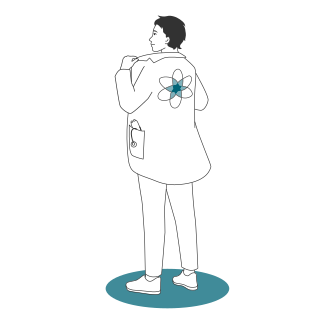
As Medical Experts, physicians possess a comprehensive body of knowledge and skills which they apply in medical practice. They collect and interpret information, perform problem analyses, and make appropriate clinical decisions within their area of expertise and competence. They check whether their decisions and associated actions are up to the appropriate quality standard and have the desired effects. They assess the extent to which they need supervision in their professional activities. They deliver curative and preventive care using evidence-based, ethically sound, and economically viable standards. Medical care includes both somatic and psychosocial aspects and tackles acute and chronic disorders and situations. Medical experts engage in effective oral, written, and electronic communication with patients, relatives, and other professionals in social services or healthcare. They keep themselves updated on developments in the field of medicine and acquire a critical awareness of the social and ethical issues associated with the progress of science.
The following “expert” section synthesizes the key objectives of undergraduate training, and as such overlaps with the objectives provided in the six other roles (as shown in the CanMEDS “flower”).
As Experts, physicians are able to:
describe and integrate the structures and underlying mechanisms governing the functions of the human body, from molecular to organ level, including pathophysiological processes and principles
demonstrate a good basic and clinical knowledge of all common situations in each discipline
perform a patient-focused consultation in the allotted time
identify and prioritize issues to be addressed in a patient encounter, and elicit a relevant, concise and accurate personal, professional, social, and family history from the patient and other sources
perform triage assessment and interventions, taking into account clinical urgency, the potential of deterioration, and available resources
conduct an effective general or specific physical examination, also in difficult situations
analyze and interpret data to establish a differential and a working diagnosis (clinical reasoning)
integrate the foundations of basic medical sciences into their clinical reasoning and the selection of relevant procedures and investigations, respecting the principles of sustainable healthcare and environment
establish a patient-centered, shared management plan and deliver high-quality, cost-effective, and sustainable preventive and curative care, including when dealing with a patient who is vulnerable and/or polymorbid (elderly) or who suffers from a terminal illness
demonstrate safe and environmentally responsible prescribing
prioritize and perform procedures in a skillful and safe manner
obtain and document informed consent, explaining the risks, benefits and rationale for the proposed options
advise and counsel patients on their health and lifestyle in an empathetic non-judgmental manner. Perform a motivational interview
set up and conduct a discussion with the family/caregivers and manage options/decisions regarding the patient’s health, condition and outcome
demonstrate appropriate medical data and information management
integrate the advancements produced by evidence-based scientific research into clinical practice
develop a critical awareness of common stereotypes in all areas of diversity that might bias clinical activities, related to factors such as age, gender, ethnicity, culture, level of education, political orientation, handicaps, and representations
identify the impact of sex (i.e. biological difference related to sexual determination), and gender (cultural and social differences across the spectrum of gender in terms of roles and expectations) on health. Address these issues in medical activities
incorporate and apply the foundations of biomedical and clinical ethics in patient care; respect values such as autonomy and dignity; identify and weigh up, in situations posing ethical dilemma, the various options available and how principles and values may affect them
recognize and disclose conflicts of interest that might compromise equitable, high quality care at individual and collective levels
comply with the code of ethics and consider the recommendations of national professional associations
take Swiss legislation into account in the care of the patients, in particular coverage for disease, accidents, occupational disease and disability; display awareness and respect for the rights of the patient
understand the population perspective as a core aspect of public health, and the application of basic principles of social medicine; advocate for the health and healthy environment of the local community and society as a whole
take into account the economic, social, cultural, and ecological aspects of health maintenance, prevention and care at individual and community levels
practice self-reflection and critical thinking related to evolution of the health care system; recognize and respond to the complexity, uncertainty, and ambiguity inherent in medical practice
demonstrate appropriate use of modern technology and artificial intelligence for diagnosis, decision making, management, communication, and patient guidance
Integrate sustainable health care into practice (management, procedures and investigations) and recognize the relationship between environment and individual or population health
As communicators, physicians establish and maintain effective relationships with patients and relatives. They use communication skills to provide high-quality care and prevention / health promotion.
As Communicators, physicians are able to:
engage in and maintain therapeutic relationships with patients based on mutual understanding, empathy, and trust
accurately and adequately convey relevant information and explanations to patients, families, colleagues and other professionals, foster a common understanding of issues and problems, and jointly develop a healthcare plan
manage disagreements and emotionally charged conversations, for example with patients, families and within teams
deal effectively with diverse groups of patients such as children, adolescents, and adults of all ages; men, women and people with other gender identities (e.g. non binary); and patients with different languages and different cultural and religious backgrounds
disclose adverse events (diagnostic and treatment failures, errors) accurately to patients and their families, to the team and to supervisors
share bad news with patients and their families appropriately (“breaking bad news”)
develop effective, shared strategies with patients to increase their adherence to therapeutic options and improve their adoption of healthy habits and lifestyles, and to integrate the patients’ relatives to support these strategies
assist patients in the adoption of health promoting habits and provide effective counselling in the use of personal data obtained through screening procedures, imaging, serologic or genetic findings (precision / prediction medicine)
improve patients' and familys' health literacy by using and assisting them to identify, access, and make use of information and communication technologies to support their health care and the adoption of healthy lifestyles
As collaborators, physicians are team players who effectively work together in interdisciplinary and interprofessional partnerships in order to provide optimum patient care, education, and/or research.
As Collaborators, physicians are able to:
optimize health care delivery in identifying and understanding the roles and responsibilities of individuals such as physicians from other disciplines, nurses, pharmacists, physiotherapists, psychologists, dieticians, social workers, religious ministers, technology experts, medical engineers, data managers and, when appropriate, the patient him/herself
communicate with respect for and appreciation of team members, and include them in all relevant interactions; establish and maintain a climate of mutual respect, dignity, integrity and trust
participate in team building strategies and conflict resolution approaches based on the model of interprofessional education and practice; define overlapping and shared responsibilities between colleagues from all healthcare professions as required
balance team needs and personal needs in order to optimize delivery of care
As managers and individuals demonstrating leadership, physicians are engaged individuals who take the initiative to contribute in a collaborative way towards positive and sustainable change in health care, from the level of an individual patient to that of the healthcare system (leaders do not need a formal title to lead). Managers take responsibility for the delivery of excellent patient care through their activities as clinicians, administrators, scholars, or teachers.
As Leaders/Managers, physicians are able to:
understand the principles of population medicine and its strategies, and use the main tools which are used in epidemiology and public health. These include the gathering and use of health determinants and indicators, descriptive and explanatory statistics, risk and protective factors and the concepts of prevention and health promotion at individual, community and environmental levels
define and illustrate health promotion and health-enhancing strategies at various levels, such as the monitoring and promotion of a safe environment and the promotion of effective public health policies and interventions. In doing so, they take into account financial, material and staffing resources, at both community and public health levels
recognize and be aware of the complexity of disease outbreaks, epidemics, pandemics, and mass casualties; recognize and respond to climate-induced events
identify and address the special needs of vulnerable populations, showing awareness of the importance of equity in the delivery of care. They seek collaboration with social services if appropriate
address the psychosocial, insurance, financial and environmental aspects of persons with disabilities and chronic diseases
identify the roles and describe the functions of the health and invalidity insurance system and its impact on health and health care at both individual and collective levels
integrate the principles of economic effectiveness and efficiency in daily work and the planning of healthcare provision
identify and engage in opportunities for continuous improvement of the healthcare system, based on a critical understanding of the continuous transformation of medicine, society, and environment
As health advocates, physicians recognize and actively promote the importance of public health and preventive healthcare for the individual patient, for patient groups, and for society. They advocate high quality healthcare to policymakers and, wherever possible, put preventive healthcare into practice. They work with those they serve to determine and understand needs, speak on behalf of others when required, and support the mobilization of resources to effect change. They take into account the historical and social aspects of the progress of science, medicine and public health. They promote sustainable healthcare and a healthy environment within the planetary boundaries.
As Health Advocates, physicians are able to:
recognize issues, settings, circumstances, or situations that require advocacy on behalf of patients, professions, or the general population, keeping in mind the structure and function of the healthcare system and insurance coverage of diseases, accidents and disabilities in Switzerland
incorporate health surveillance activities into interactions with individual patients (discussing lifestyles, counselling). Such activities include, but are not limited to screening, immunization and disease prevention, risk and harm reduction measures, including from environmental hazards, and health promotion.
work with a community or population to identify the determinants of health that affect them, how to address them and promote system-level change in a socially and environmentally accountable manner
recognize the central role and functions played by primary care in the population
inform the population on the risks of climate change and biodiversity loss on health. Advocate for systemic actions to mitigate these impacts on health and adapt to global changes
As scholars, physicians recognize the need for lifelong learning and continual updating of their professional expertise. They strive to make scholarly contributions to the assessment, establishment, and understanding of knowledge and skills in healthcare. They actively participate in teaching, and facilitate the education of medical students, other health professionals, patients and members of the community. They develop and maintain critical thinking about the scientific progress of medicine and health.
As Scholars, physicians are able to:
develop and document a reflective attitude towards learning and education, for example in their learning portfolio
apply basic principles of critical appraisal to best available sources of evidence-based medical information. Identify ethical principles that apply to basic and clinical research
demonstrate the critical use of information technology to access accurate and reliable (online) medical information, taking into account the levels of evidence provided by the medical literature, and integrating it into patient care
understand the general theoretical principles of medical and scientific knowledge and show an awareness of its development, its problems and limits
identify and develop a research question or hypothesis, work out a procedure to address the issue, analyze and synthesize the results, and publish these as a scientific report or article. Effectively present medical information based on scientific evidence
adapt to new technological advances, e.g. clinical decision support systems, artificial intelligence, and options for remote patient monitoring
facilitate the learning of patients, students and health professionals, provide effective feedback to enhance learning and performance, use assessment and evaluation tools
As professionals, physicians are committed to the health and well-being of individual patients and society. This is expressed by their ethical practice, high personal standards of behaviour, accountability to the profession and society, as well as physician-led regulation and maintenance of the physician's own health.
As Professionals, physicians are able to:
display integrity, honesty, commitment, empathy and accountability in taking care of patients and communicating with families and colleagues
be aware of their own limits, seek supervision when appropriate, and timely refer patients to experts when needed
respect patients’ privacy and confidentiality
show awareness of individual factors (e.g. cultural, societal, and spiritual/religious issues) that impact on health and delivery of care of individuals and of the community
recognize that the patient’s wishes and preferences are central for medical decision-making (“shared decision-making”)
incorporate and apply the principles of biomedical and clinical ethics in the care of patients; identify the principles and values that affect the available options in situations that pose an ethical dilemma; act according to the highest available ethical recommendations (e.g. national professional associations); recognize and manage conflicts of interest
demonstrate accountability to their profession and society, respect their legal and professional obligations and the codes of regulatory bodies
act with respect towards colleagues and other healthcare professionals; recognize and respond appropriately to unprofessional and unethical behavior by physicians and other health care professionals, such as sexism, sexual harassment, racism, or any other forms of discrimination
allocate personal time and resources effectively in order to balance patient care, learning needs, and private activities outside the workplace, and to sustain their own health; recognize excessive stress; recognize their own substance misuse or personal illness in order to protect patients
anticipate career choices and plan their own future training and activity